



Dr. Mian Muhammad Aslam
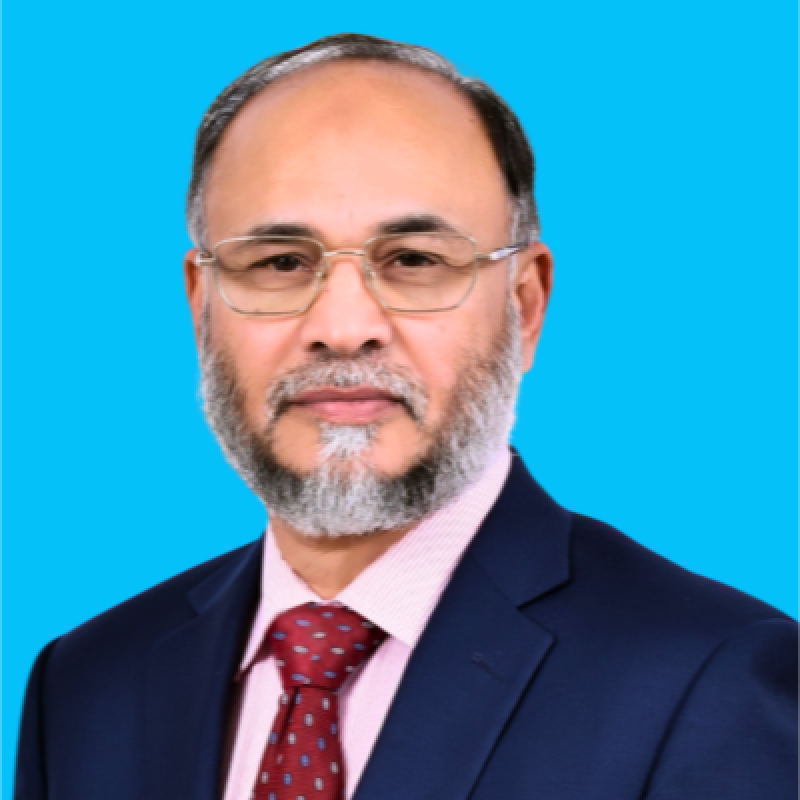
Blueprints to Boardrooms: Dr. Mian Mohammad Aslam's Journey with a Doctorate in Business Administration
Engineers are trained to build things that last. But for those who spend decades designing, delivering, and leading, a different question eventually takes over: what makes an organisation itself last—not for one project cycle, but for generations?
Dr. Mian Mohammad Aslam's career is a study in that question.
Based in the United Arab Emirates, with more than 35 years of experience spanning civil engineering, construction management, strategic planning, and enterprise leadership, Dr. Aslam has spent his career moving from technical delivery on landmark projects to advising organisations on how to build institutions that outlast any single leader, market cycle, or generation of management. His Doctor of Business Administration, specialised in Corporate Governance, from East Bridge University—completed with Distinction at 82%—reflects that evolution directly.
A Foundation Built on Technical Rigour
Dr. Aslam's grounding began with a degree in Civil Engineering from the University of Engineering & Technology, later strengthened by an MBA specialising in Project Management from the University of North Virginia, USA. Along the way, he added a stack of professional credentials rarely found together: Certified Lead Auditor of QMS ISO 9001 from IRCA UK, PMP certification through PMI USA, and status as a certified Health and Safety trainer and consultant.
For Dr. Aslam, every credential answered a question his work had already raised. Certifications weren't collected in advance of responsibility—they followed it, each one arriving because a project or a role demanded a sharper set of tools than the last.
From Project Systems to Landmark Developments
Early in his UAE career, as Head of PCS and QHSE at Al Faraa Construction and Industrial Group, Dr. Aslam built and implemented quality and project control systems using some of the most advanced automation tools available at the time—work that gave him a close, technical view of how large construction organisations actually function day to day.
That systems-level thinking carried him into one of the more demanding stages of his career, as IMS and Strategic Planning Manager and Project Director at Trojan Construction Holding, a subsidiary of Alpha Dhabi. There, he developed integrated management systems aligned with PMBOK and Total Quality Management principles, while also preparing technical tender proposals for two of the region's most recognisable landmark developments: the Guggenheim Abu Dhabi and the Louvre Abu Dhabi Museum. In the same period, he took direct leadership as Project Director on a major development valued at AED 3.4 billion.
Few professionals get to work at that scale more than once. Dr. Aslam did it repeatedly, moving between hands-on technical delivery and the strategic systems that made such delivery possible.
Building Vision at Enterprise Scale
His responsibilities widened further as Strategic Development Manager at Trojan Holding, where he contributed to shaping the company's vision, mission, and long-term growth plan. The target was ambitious: grow overall turnover to AED 2.5 billion, expand the workforce to 28,000, and build out 15 subsidiary companies and AED 350 million in plant and machinery, positioning the organisation for a public listing by 2020. The plan succeeded ahead of its own timeline, with the target achieved before 2018—one of the clearest markers of his shift from project execution to enterprise-level strategy.
Alongside this corporate career, Dr. Aslam built his own practice. Since 2000, he has served as Founder and Director of Castle Shepherd Gilmour, an architecture, engineering, project management, and BIM consultancy headquartered in Islamabad, later extending the firm's reach into the UAE as Partner and Managing Director for major projects delivered in partnership with CAP PMC. He also holds shareholdings in ACCRID International, a training and capacity-building organisation serving construction professionals across the UAE and Qatar, and in CSG InfoTech, a company developing AI-driven digital systems for organisations pursuing automation and stronger governance.
Why a Doctorate in Business Administration Matched His Professional Journey
By the time Dr. Aslam considered doctoral study, he had already spent decades solving the practical problems a DBA is designed to examine. Three things made the fit a natural one.
First, the program was built for professionals with substantial leadership experience already behind them, not for those starting out—meaning his research could draw directly on decades inside boardrooms, project sites, and strategic planning sessions rather than starting from theory. Second, it kept his research tethered to a real, unresolved question in his field: how does an organisation sustain itself not just for a decade, but for centuries? Third, it gave him a structured way to turn that question into something the wider industry could use.
That question became the centre of his doctoral research at East Bridge University: a Corporate Governance Framework for Corporate Longevity, built around seven pillars—business process adaptability, governance structures, stakeholder loyalty, cultural resilience and purpose, ESG integration, strategic resilience and foresight, and succession and leadership sustainability. Together, these pillars form a working model for how organisations can build the resilience, leadership continuity, and institutional strength needed to endure for 200 years and beyond.
Advising Institutions on Their Own Longevity
That research now sits at the centre of his current work. As Project Director at Trojan Property Investment, part of Alpha Dhabi, Dr. Aslam leads a special strategic transformation assignment focused on institutional sustainability and long-term organisational strength—applying the same seven-pillar thinking he developed academically to a live enterprise setting.
His contribution to the field extends beyond any single organisation. For more than a decade, he served as an Industry Advisory Committee member for the Civil Engineering Department at the Higher Colleges of Technology, one of the UAE's largest government-owned higher education institutions, helping align academic curricula with the realities of modern construction practice. He has also authored a professional guide on excellence in the construction industry, drawn from his own decades of practical experience.
In December 2025, his research earned wider recognition when he received the Global Business Icon Award at the Global Excellence Conclave, honoured specifically for his landmark work on the seven-pillar governance framework for corporate longevity. The award marked a turning point of sorts: research that began as doctoral inquiry at East Bridge University was now being recognised on an international stage as a genuine contribution to the field, not merely an academic exercise. For Dr. Aslam, the two milestones are closely linked. EBU gave his decades of practical experience the structure and rigour to become a defined, transferable framework; the Global Excellence Conclave gave that framework an audience beyond his own projects and clients, positioning him as a thought leader in corporate governance and organisational longevity rather than solely a practitioner within it.
A Career Still Building
From technical project systems to landmark museum tenders, from a AED 3.4 billion development to an enterprise growth plan that outpaced its own deadline, Dr. Aslam's career has consistently moved toward one destination: understanding what allows organisations, not just projects, to endure.
East Bridge University congratulates Dr. Mian Mohammad Aslam on completing his Doctor of Business Administration with Distinction, and welcomes him to its global community of doctoral graduates. For professionals like him, who have spent decades building expertise and now want to turn that experience into research with lasting industry impact, a Doctor of Business Administration from East Bridge University can provide the pathway to that next chapter. Built for practitioners, and not just students, the doctorate program doesn't ask experienced leaders to set aside their careers to study — it's structured so decades of real leadership become the raw material for the research itself, rather than something to leave at the door. Moreover, Research with real-world application as seen in Dr. Aslam's doctorate didn't just produce an abstract thesis; it produced a working framework he now applies directly in his current role at Trojan Property Investment — proof that the research was designed to be used, not shelved.