

When people hear "educational innovation," they often picture robotics, virtual reality, smart classrooms, iPads, artificial intelligence, or advanced learning management systems. I now think that true innovation starts long before any digital device is used in the classroom, even though technological innovations have certainly transformed modern education. Technology is just a tool; real change happens when teachers instill lifelong learning, critical thinking, and curiosity in students.
As a science teacher and lead laboratory technologist, clinical scientist, and researcher, I have learned that innovation is not determined by the latest software or the latest trend in education. It is about how well we motivate kids to think for themselves, to come up with new solutions to challenges, to use their learning in a big way. And it is not just teaching students but changing the classroom itself that is at the heart of educational innovation.
I have seen some of the most memorable educational experiences that have nothing to do with technology. They happened when students collaborated on solving challenging scientific questions, questioned assumptions in a lab, or came up with a solution on their own. I have seen students who seemed initially resistant to learning become more confident after creating an experiment or communicating a challenging idea to their colleagues. These are examples of how education is truly human. And instead of being only technology-driven, it is motivated by curiosity, involvement, encouragement, and reflection.
I’m on a somewhat unusual career path in education. I was a clinical scientist and medical laboratory technologist for a number of years before I decided to become a full-time teacher. Precision, accuracy, ethical responsibility, analytical thinking, and evidence-based decision-making were all required in the laboratory. Because the slightest mistake could have a huge impact on patient care, every diagnostic result had to be carefully interpreted. I learned that learning never ends in medicine. Professional staff should constantly upgrade their skills to be able to provide the highest quality care, and we have to do it all the time because science is always changing.
When I finally began to teach, the skills I acquired in clinical labs were exactly what students needed to thrive in the rapidly changing world of today. Critical thinking, data interpretation, observation, teamwork, resilience, and scientific inquiry are important life skills for all students, regardless of their eventual job. And they are not just for healthcare workers. This had a great impact on my teaching philosophy.
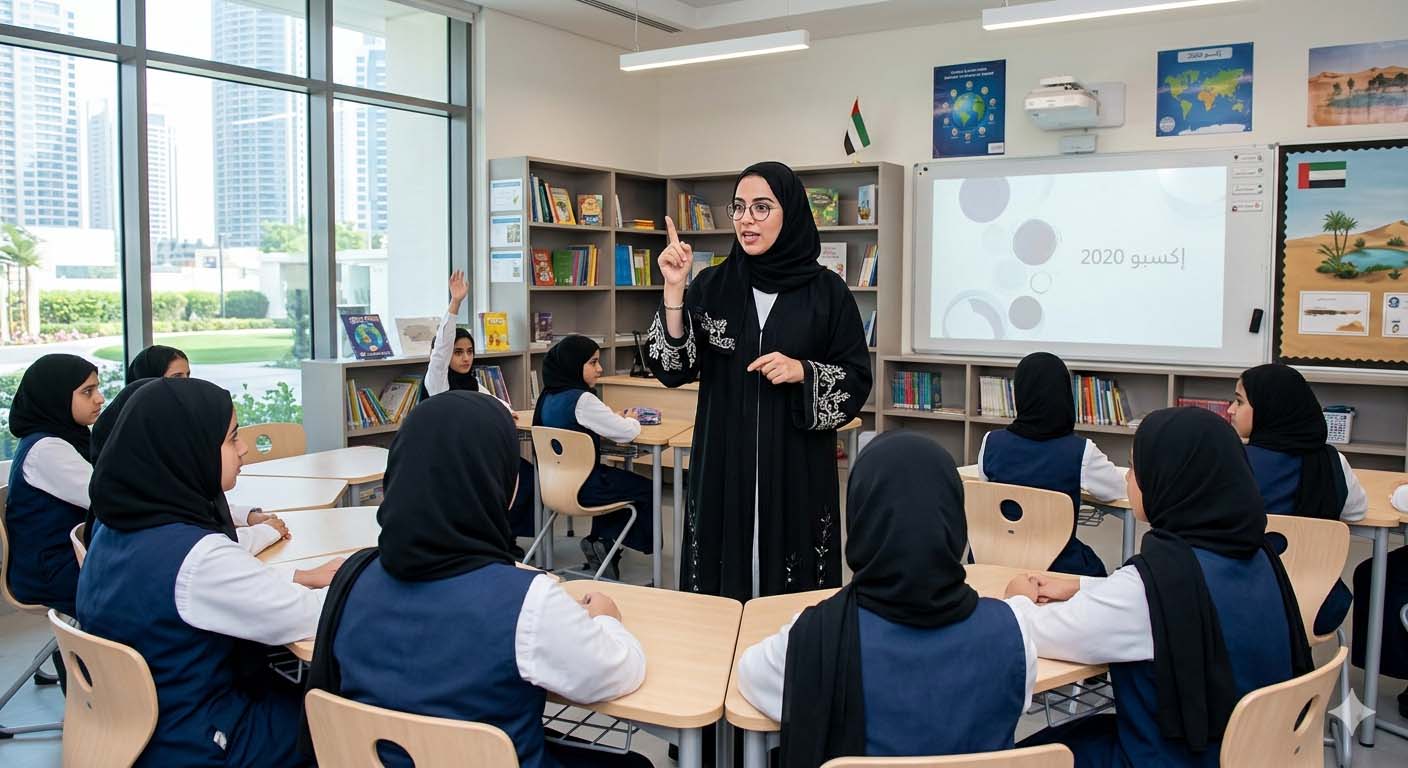
I always try to bridge the gap between abstract concepts and practical applications as an IB Science teacher in Dubai. When students understand what they are studying and how it is relevant to their day-to-day lives, they become engaged. Science should never be thought of as being a series of facts and formulas that must be recalled to pass an examination.
For example, genetics education is greatly more relevant if genetics is applied to genetic counseling, inherited diseases, customized treatment, and recent medical advances. And when students are presented with pandemics, antibiotic resistance, vaccines, and public health efforts in response to the information on microorganisms, such discussions about them go far beyond textbook discussions. When students realize how chemistry is applied in forensic investigation, agriculture, renewable energy, pharmaceutical research, and environmental protection research, chemistry becomes even more fascinating. When students study transportation systems, renewable technology, space exploration, and engineering advances, physics becomes more than just equations.
"Why do we need to learn this?" is a question students frequently ask. I view this as an opportunity rather than a challenge. Each scientific idea has a specific application, a goal, and a narrative. Teachers can turn students from passive learners into investigators and students who realize the value of education outside of test rooms through linking classroom instruction to real-world experiences.
I think the most important thing I found in my work and life is that pupils often don’t remember every term, formula, or information they’re taught in school, but rather what they do remember is how an educational experience has changed their thoughts, emotions, and life itself, which they find very important to learn. They recall the teacher who supported them in the middle of self-doubt and had faith in them. They recall the experiment that was so successful (or failed) that they were able to learn from both. They recall the group project that showed them that they could do their best in the group project, which was the way they grew in their leadership, worked together, and were able to communicate with each other as a group. In particular, they recall being self-assured.
Because of this, curriculum content delivery should never be the only focus of educational innovation. Efficiency is important, but education is about change. Making educational environments in which kids are taught to think critically, ask better questions, accept challenges, and keep learning long after they leave the classroom should be our primary objective.
Creativity is also a question of curiosity, and that should be looked at more. Children start school curious. They look around them, ask questions, and hope for an answer to the world. But the traditional school system tends to place more emphasis on memory than on inquiry, so over time, this curiosity can be undermined. We, as educators, need to protect and nurture this curious way of thinking.
In my own classroom, inquiry-based learning has been one of the most successful approaches I have found. I encourage students to investigate issues, develop theories, put theories forth, look at supporting data, and not just propose solutions to them but also to challenge what is known and argue for them. That includes education based on scientific knowledge; that is to say, it creates resilience, confidence, communication ability, and intellectual independence. Kids learn to see that mistakes are a part of learning and not a sign of failure.
It is equally critical to establish a space in which students feel psychologically comfortable to voice their opinions without being judged. When students feel comfortable asking questions, suggesting new strategies, and getting involved in civil academic debates, innovation is at its best. A classroom built on trust is much more creative than just getting answers.
Educational innovation is also greatly influenced by assessment procedures. Traditional tests are still useful for assessing some areas of learning, but they should not be the only measure of student learning. In higher education and future jobs, practical skills like cooperation, communication, problem-solving, creativity, flexibility, and ethical reasoning are becoming more and more important. So students can develop these more general abilities in school while also developing conceptual skills with project-based learning, hands-on research, reflection exercises, presentations, and group projects. Teachers themselves are innovative. Teachers who are successful are lifelong learners who constantly review their own methods. Coursera courses and certifications shouldn’t be the only things that you do for professional development. Rather, it should inspire educators to try out new teaching techniques, learn from their peers, participate in research on educational methods, and assess how well they’re doing. Each classroom is different in its own way, and each lesson is a new source of information for ongoing progress.
I have had the good fortune to work in a variety of fields throughout my career: healthcare, teaching, research in healthcare, laboratory sciences, and holistic learning. All these experiences have provided me with good perspectives in my teaching style and have been eye-opening from every angle of a teacher. My educational experience has shown me empathy, communication, and individualized learning, and my scientific background is related to analytical thinking and evidence-based practice. Taken together, these are lessons that education is both an art and a science.
And many of today’s pupils will eventually end up working in fields that don’t exist yet because technology is progressing so fast. Automation, biotechnology, artificial intelligence, environmental sustainability, and digital transformation are already changing industries in every area of the world. And education needs to prepare students to be able to adapt, create, and learn throughout their lives rather than just remember what they know.
As a result of this change, teachers need to concentrate more on transferable abilities than on discrete subject matter. In addition to academic excellence, students need to work on flexibility, emotional intelligence, ethical decision-making, teamwork, creativity, digital literacy, and effective communication. Technology or no technology, these skills will always be useful.
Teaching innovation will only come to fruition if collaboration between schools, families, businesses, and communities is strong. The classroom walls needn't be the only place where learning takes place. Guest lecturers, field trips, science contests, community service programs, research opportunities, and interdisciplinary partnerships also help students to understand the broader significance of their studies. Students are more motivated and more accountable if they perceive what they learn in the classroom as something to be shared with society.
We should never forget as educators that encouraging transformation and not just teaching is part of the job. Each student has special abilities that are deep-rooted in them, and that are waiting to be discovered. Sometimes all that is required for a young person to change their life is one good moment, one good project, or one good educational opportunity. What we start building today will become a breeding ground for future scientists, medical professionals, engineers, entrepreneurs, educators, and caring citizens of the world: we might never fully appreciate the impact.
I have my hopes for the future of education. Classrooms do change with technology, but they should always enhance and never take the place of the interpersonal connections that are the basis of education.
In the end, being innovative in education is not about having the latest technology or following every new trend. It’s about creating environments that encourage children to ask questions, investigate, work together, produce, and develop. It’s about giving students the confidence and the desire to keep learning throughout their lives.
Technology may change the way we teach children, but it also changes the reasons kids learn. Innovation is the best way to reach a level of knowledge when education is focused on intelligent, caring, and capable students and not only on knowledge. The lives that are molded by what happens in our classrooms rather than the technology we know are the best signs of academic achievement.
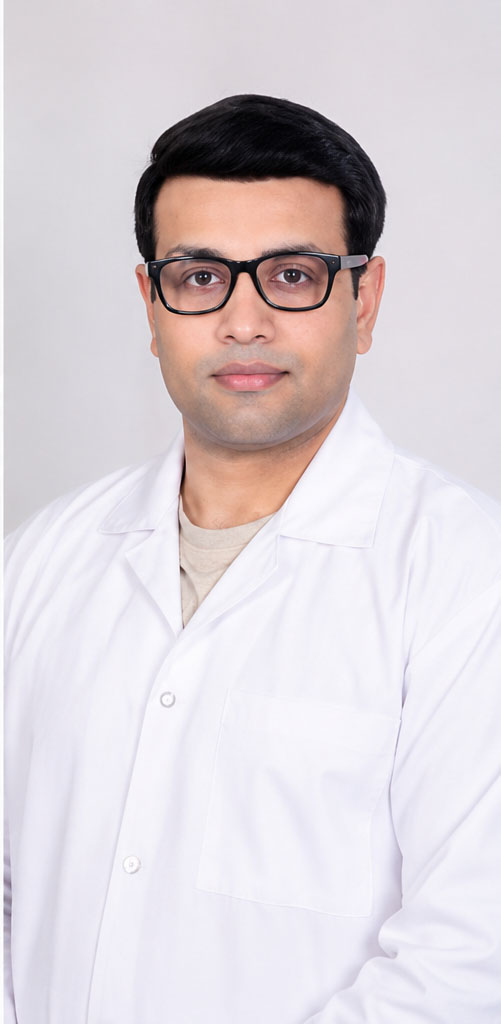
Science Teacher | Lead Laboratory Technologist | Clinical Scientist | Researcher | Author | Educational Innovator
Dr. Shaikh Abdulla Xec
Dr. Shaikh Abdulla Xec is a distinguished educator and holistic practitioner whose work bridges science, education, and personal transformation. With extensive experience across global curricula, he champions inclusive, student-centered learning. Beyond academia, his contributions to holistic wellness position him as a multidimensional leader committed to intellectual, emotional, and spiritual empowerment..