


Leadership
The Promotion He Walked Away From to Save His Son | A Story of Leadership, Resilience & Purpose

This article isn’t about success, nor about posting overseas with great perks, but it is a powerful story about a man who gave up his well-paying Corporate VP position in a German multinational company in Singapore to straighten up his rebellious son, who was kicked out of a prestigious secondary school in the third year for all his mischievous behaviour. It is about the struggle he went through looking for another job at the age of 53. Not just another job, but one in which he can contribute his knowledge and experience. And the struggle thereafter: he found one after quite some time in a foreign country, in which the business language is mainly Putong Hua ( Mandarin ) and in a completely new industry, which is very tough - the Automotive industry with its stringent Quality requirements, short lead time to deliver, demanding contract terms from OEM and Tier 1 customer and a Chinese workforce which is still in the stage of learning on the job. The secret to survive in such an environment is not talent nor a genius but a special blend of passion and persistence. A never-give-up attitude.
I remembered vividly that year was 2003, when I resigned from my Position as VP of Manufacturing and Projects. The job was to run the manufacturing operations of the factory in Singapore and also to oversee the development of new products at our HQ in Germany and eventually transfer the project to the mass manufacturing phase in the Singapore factory.
I loved the job, but after much consideration, I concluded that I needed to do something to bring my son back in line, or I would lose him. I had one son and one daughter, who fortunately is very independent and takes care of herself well. When my son was a boy, everything was great. He did not give any problems. However, due to my work and frequently travelling to our HQ for meetings, project discussions, and the eventual transfer of the project to manufacturing in Singapore, I missed out on much of his growing up and, of course, the communication with him. When he was 17, he began to treat me like a stranger. His friends are closer, and eventually, he had a group of friends ( mostly from the neighbourhood and not from his school ) who fancy stunt bikes. They would gather in certain locations to practise, and school the next day was not on their mind. Often, I had to drive out to look for him, and when I found him, he would be very angry and would question me about why the rest of his friends' parents do not look for them.
I would ask him to go home. When he reached home past midnight, he would bang the gate hard to close after I opened it for him to come into the house. And he would shout at me and warn me not to look for him whenever he is out for his biking event.
After I left my job, I had full focus on his activities. He had been asked to leave his school, and I enrolled him in a private school ( not a great one ), and every morning I had to wake him up and send him to the school. To ensure that he did not slip away after his class, I had a quick lunch and would be there at his school before they dispersed in the late afternoon, and brought him back home. He would spend time on his PC, not so much for his lessons but online games. I accepted that as it is better than him spending time with his friends on his stunt bike activities.
Towards the end of the year, I hired him a tutor who would spend time with him for his O-level examination. When the results were announced a few months later, he scored very well and had no problem securing a place in a Polytechnic Diploma course.
With him settling down for his further studies, I started applying for jobs to fill the financial gap after being unemployed for nearly two years. After many applications to openings, I was not able to even secure an interview. Many HR in my country, unfortunately, consider guys at age 53 too old! I do not want to challenge that, but I had to look beyond our shores; I finally contacted my former company Director. His company had expanded into China and had made substantial investments to get into the Automotive industry, which was growing aggressively in China at that time in 2005. In fact, they had some great projects, but the delivery performance was pathetic. Many projects were still stuck in the approval cycle due to not meeting the customer requirements in quality and not achieving the technical requirements, among others. Indeed, even my HQ owners are new in this business line.
I arrived at our Shanghai Office in mid 2005, which was the centre of our Automotive Business venture as Regional Business Development head for Asia. Indeed, there were many projects still not approved for mass manufacturing. Weekly meetings were conducted in Mandarin, and the e-mail communication was also in Mandarin. A few English-speaking expatriates from Singapore were heading some critical departments, but to communicate with the local Engineers and technicians, Mandarin was needed. I had studied Mandarin for ten years during my primary and secondary school till 1969. In between, all my Polytechnic studies, apprenticeship training in Germany, and the entire working life till 2005 were in English. I felt strong pressure to work on my Mandarin, and it was weeks of learning under a local teacher after work. Temporarily, my only help was my secretary, who could understand more than Basic English. I had to depend on her to read my e-mail, summarize it for my understanding, and then translate my response into Mandarin to respond. For the weekly meeting, I use a recorder to listen over a few times at home. I was able to grasp only about 50% of the meeting!
Another major challenge happened 4 months later. My Sales Manager, a local Singaporean too cannot take my constant checking on the Quotation process and quit. To make it worse, he convinced the Project Manager to resign too. They threatened me that I would not last 6 months in the job, and my response is - do not challenge me. I will stay for a long, long time to straighten things out. I decided then that I do not want a replacement from HQ. I will work with the local sales Engineers and promote them once I think they are ready for a managerial position.
I had to train up a few locals in the Costing aspects and project management to meet the increasingly stringent requirements from our Customers, in addition to bringing in new customers and projects.
Additionally, I need to convince our HQ bosses on what machines we bought in the initial investment were white elephants to be sold to invest in the machines to win projects within our capabilities. It was not an easy feat, as it may affect their ego, and besides, I am also a new kid in this industry. I too had to be up to speed on the contracts which we need to sign with our Customers. Fortunately, these were in English, as most of our Tier 1 Customers were European and US companies. Much had to be learned fast on the Jargon of these contracts.
I am not exaggerating when I say that I spent countless nights working beyond midnight to read these contracts and to convince our HQ that they are in order after many to-and-fro discussions with Customers. I must add, too, this is indeed only possible cos my family is not with me in China.
The results triggered in slowly. After the first two years, I was able to increase the automotive annual sales for Shanghai plant alone from 6 Million USD to almost 15 million USD. This figure increased to USD 49 million after 6 years in 2013, while at the same time monitoring the other plants in Asia. In 2014, there was a merger with a USD group, and I was designated as Senior Manager, Global Business Development for the Automotive Mechanical sector. Increasingly, I was managing an annual sales portfolio of USD 150 million when I retired from the group back in 2019.
Leadership is best tested, not during normal times but during adverse and challenging times, working hard with passion, conviction, and long-term persistence. Leading by example and motivating the entire team to achieve the goal. And more importantly, 53 years is not too old to achieve success. Now, at 73, I am pursuing my Executive Doctorate Degree with East Bridge University. Another chance to prove to myself that success is not about talent and being a genius but a combination of passion and persistence to achieve the highest epitome in my academic achievement.
Editorial Disclaimer
The views, opinions, analyses, interpretations, and conclusions expressed in this article are solely those of the respective author(s) and are provided in their personal and professional capacity. They do not necessarily reflect the official views, policies, positions, or endorsements of Bridge Forward, East Bridge University (EBU), or any of their governing bodies, management, faculty, employees, affiliates, partners, or editorial representatives. The author(s) bear sole responsibility for the accuracy, originality, completeness, and legality of the content. While every reasonable effort is made to maintain editorial standards, Bridge Forward and East Bridge University make no representations or warranties, express or implied, regarding the accuracy, completeness, reliability, or suitability of the information contained herein, and expressly disclaim any liability for any loss, damage, claim, or consequence arising from the publication of, or reliance upon, such content.
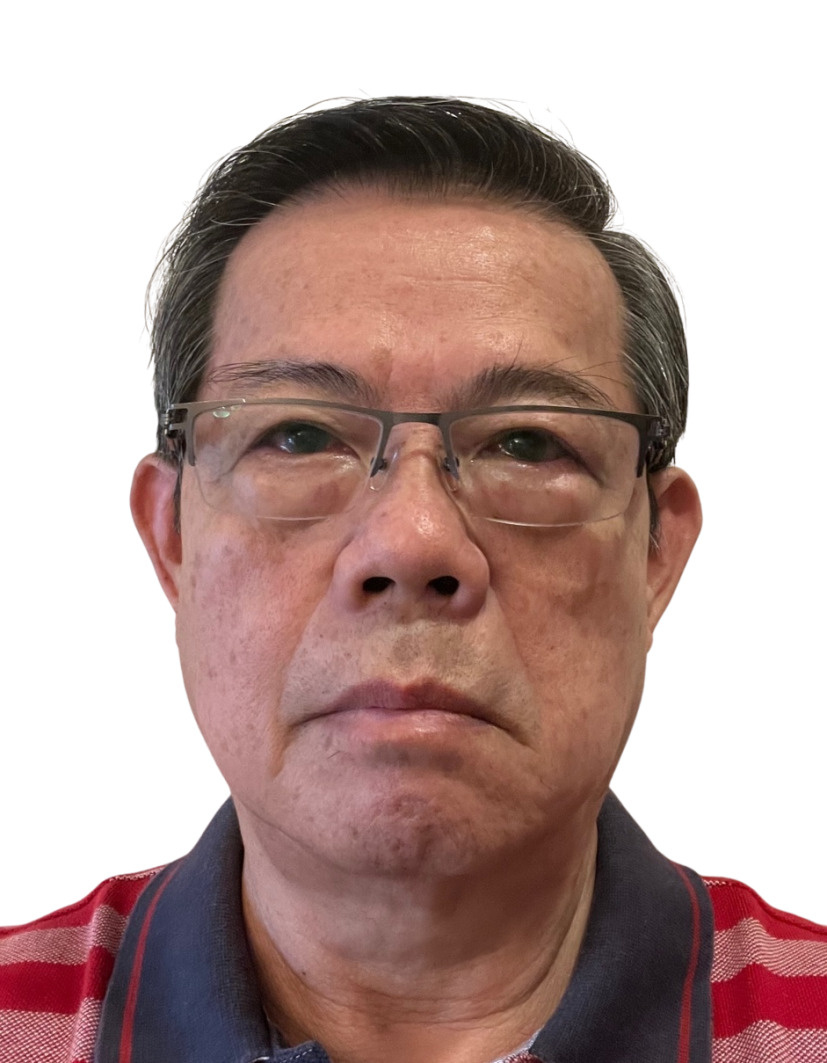
Business Consultant
LOH SIEW KEE
Business Consultant with 46 years of working experience in the electrical and electronic manufacturing industry and the last 13 years in the Automotive Industry on a Global platform. Skilled in Operations Management, Supplier Quality, Global Sourcing, Production Part Approval Process (PPAP), and Procurement. Strong sales professional with a Master's focused in Business Administration from the University of Leicester and an Advanced Diploma in Industrial Engineering..